Sample clarification desk
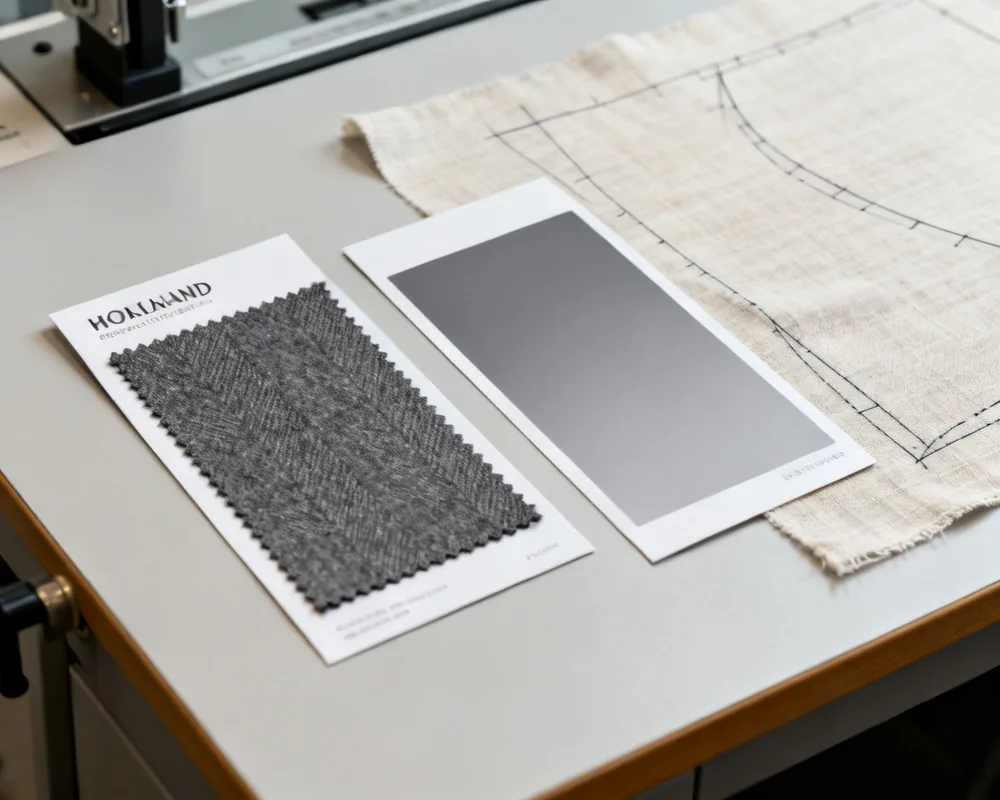
Describe the difference
A useful sample conversation starts with a dated reference and a single change. If the jacket cloth should keep the same wool handle but move one step cooler in shade, write that as the question. If the linen should stay in the same yarn count family while the weave opens for a warmer climate, write that instead. Mixing both requests in one sentence makes the next cutting hard to judge.
Composition belongs on the same note as construction. A wool and silk and linen blend is not interchangeable with an all-wool twill just because both are proposed for suiting. Record the declared fibre percentages when you have them, and mark the field open when you do not. A 260 g/m² wool twill and a 240 g/m² wool-silk-linen cloth need those masses written with a tolerance. A cuttable width such as 150 cm is not the same figure as the full width that includes the selvedge.
Shade is a lot question. Daylight at a cutting table and a store lamp will not rank two greys the same way. Name the light you used, or simply attach the physical reference and say which edge of the swatch is the approved face. Finish sits beside shade: a pressed wool clear-finish and a softer milled surface can share a fibre label and still fail a hand comparison.
- What should stay the same?
- Which construction or finishing property needs review?
- How will the next sample be assessed?
Order quantity and destination describe the commercial frame. They do not prove that a cutting is available, and they do not set a minimum. Keep them in a separate line from the cloth description so a missing delivery fact does not erase a clear material question.
This desk does not assign a mill identity, a certificate or a test number. If you already hold a report, quote the method and the specimen state. A pilling note on a trouser cloth does not answer abrasion on an upholstery linen. When the reference is thin, the honest next step is to list the missing field rather than treat two cloths as equivalent.
When the reference is incomplete
State the missing information rather than assume equivalence. A photograph of a finished jacket crops out width, yarn and the reverse of the cloth. Ask for those items before anyone calls the next cutting a match.