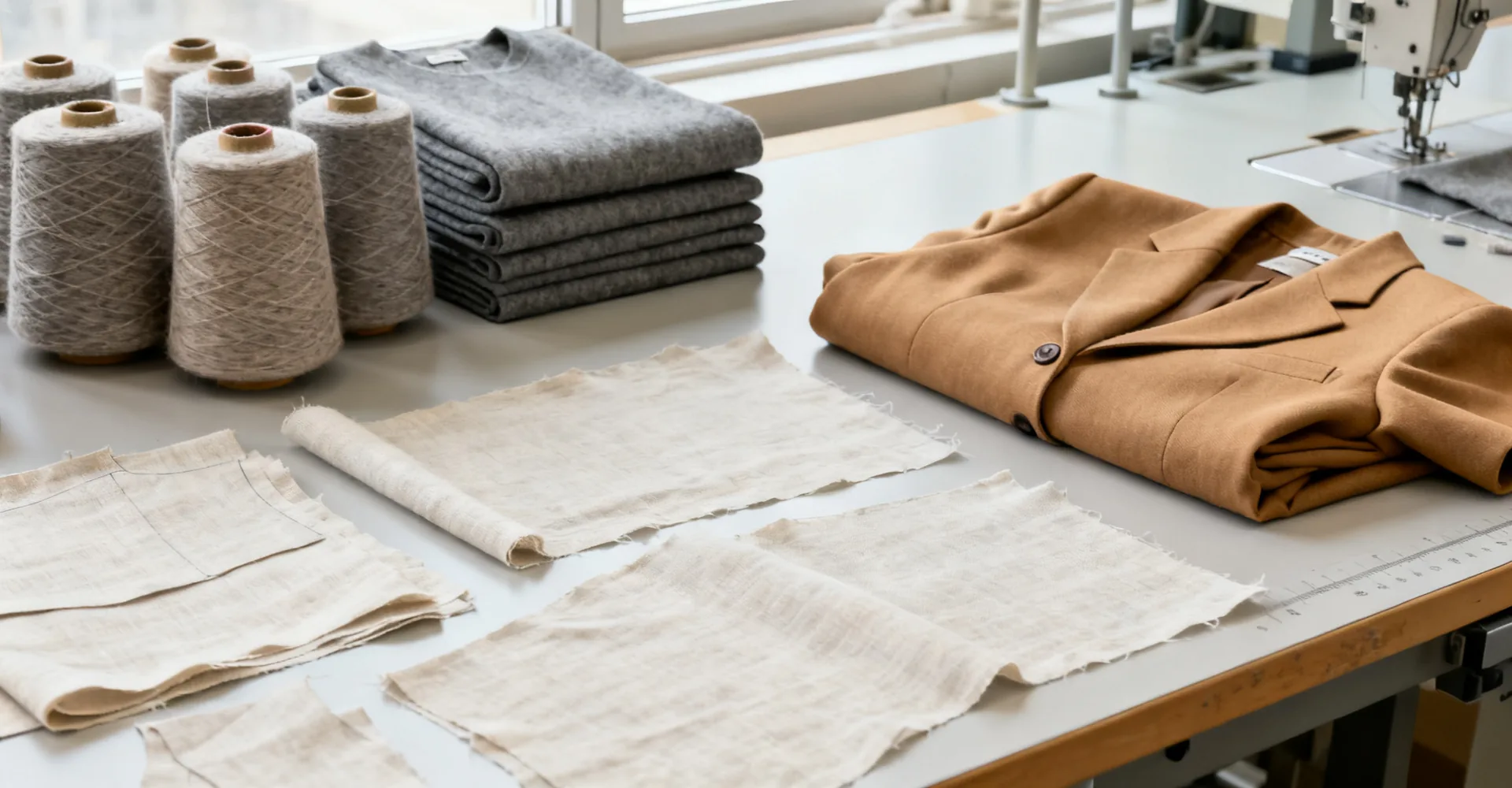
Wide unbranded table with wool yarn cones, woven suiting cloth and linen inspection cuttings

Connect the material decisions

Loro Piana Textile Division — From brief to agreed sample

Discuss your fabric requirements
  1. Define the fibre
  2. Review the construction
  3. Approve the sample

Water and vapour are separate

Liquid water resistance

A splash on a wool suiting or a water mark on linen is a liquid question. It depends on the fibre, the weave density and any finish that was actually applied to that cutting. A dry, smooth hand does not tell you how the cloth behaves when water sits on the surface.

Context
Pressure, exposure and construction

Moisture transmission

How a jacket cloth feels in humid air is a different conversation from spotting. Wool can hold moisture vapour while the face still looks dry. Linen can feel crisp in one room and softer in another. Those observations need a named method and the same specimen state before anyone compares numbers.

Context
Method, gradient and specimen state

Material scope

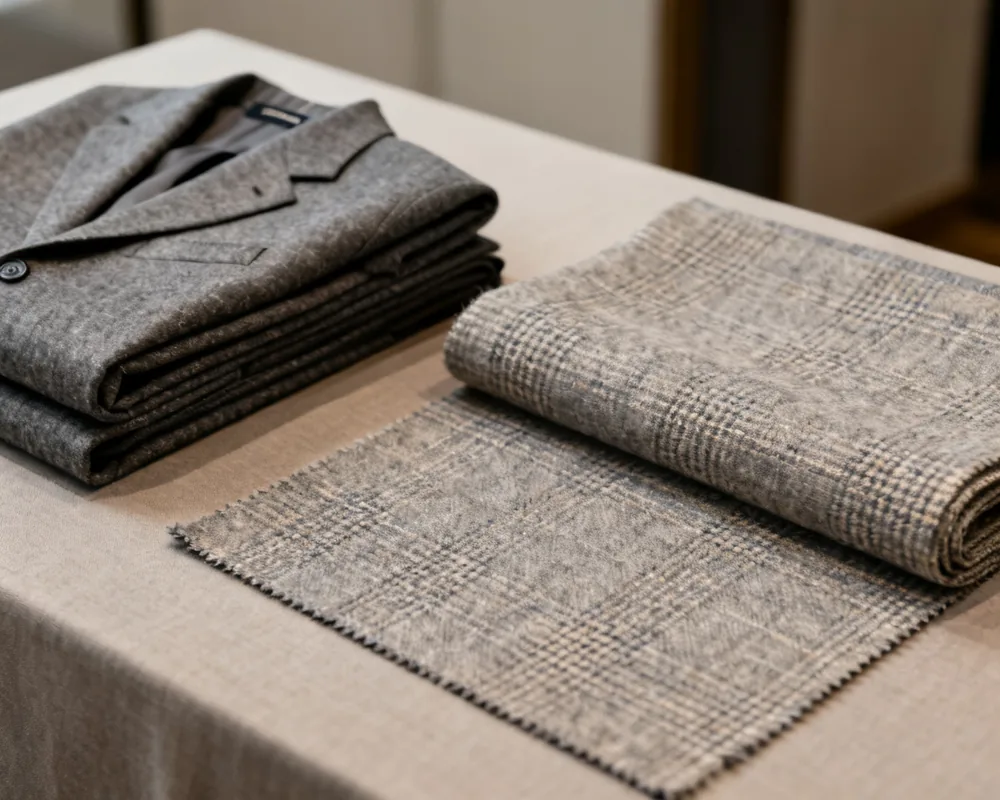
Folded unbranded wool and wool-silk-linen suiting cuttings

Wool and wool-silk-linen apparel cloth

Start with the fibre declaration, then the weave, the target grams per square metre and the usable width. A wool cloth and a wool-silk-linen cloth can share a similar shade and still drape differently in a jacket.

View material scope
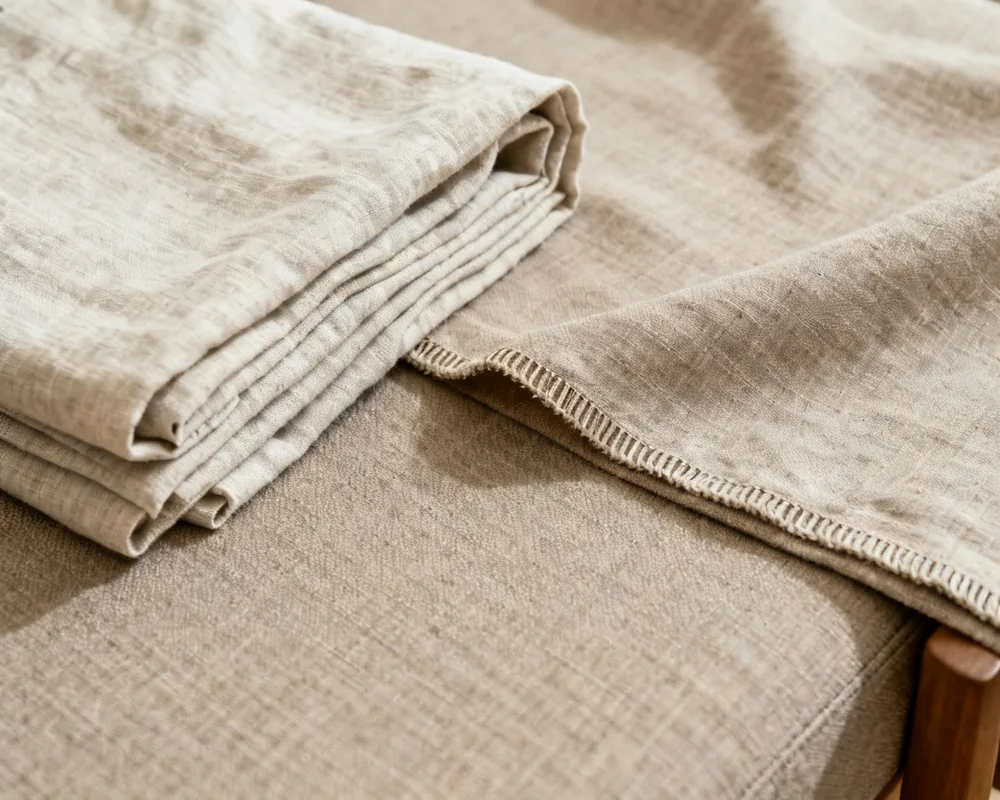
Unbranded linen apparel and upholstery fabric folds

Linen for apparel and interior cloth

Apparel linen and a heavier interior cloth share a fibre name and little else. Record the construction, the finish and whether the use is a garment or upholstery before you compare hand.

View material scope

Match the application

  1. Identify the setting

    Tailoring cloth is judged on drape, crease and how it sits against a lining. An interior cloth is judged on seating wear, light and cleaning. Name the setting before you ask for a similar look.

  2. Describe the stress

    Handle, care, liquid spotting, humidity and surface wear are separate stresses. A suiting that feels pleasant in the hand still needs its own note on pressing and abrasion if the same cloth is proposed for a chair.

  3. Match the evidence

    Bring the composition declaration, the GSM target with its tolerance, the cuttable width and the shade reference that belongs to that lot. A fibre brand name is not a test report.

Material reference Application Order context

Fabric selection questions

Why is GSM not enough?

Mass per unit area does not define construction, handfeel or finish. A 260 gram wool twill and a 260 gram wool-silk-linen plain weave can share the number and still tailor differently. Review the weave, the yarn and the finish beside the grams.

How should I describe a sample?

Name the fibre blend, the construction, the usable width and whether the cloth is for a jacket, a trouser or an interior piece. Add the shade reference and say which part of the handle you want kept. A photo of a finished coat is not a cloth specification.

Can test results be compared directly?

Only after the method, specimen state and scope are checked. A colourfastness note, a pilling observation and a comment about humidity are three different records. Water on the surface and moisture moving through the cloth are not the same property.
Numbers a brief can carry. They are comparison fields, not measured results for a stocked quality.
Field Example to write What it does not prove
Mass 260 g/m² wool twill, or 260 g/m² wool-silk-linen Same mass does not mean the same weave or hand
Usable width Cuttable width in cm, selvedge excluded Full cloth width on a ticket
Composition Fibre percentages that can be checked toward 100% by mass A fibre name used as a certificate
Separate records Colourfastness, pilling and abrasion, each with its method One humidity comment covering all three

Need help reading a specification?

Send the method name, the condition of the specimen and which lot the shade reference belongs to. Leave unknown mill capacity and certificates out of the brief.